(833) 569 7223


What Is CBG? The Complete Guide to Cannabigerol
By Todd Smith, Co-Founder
Scientifically reviewed by Dr. Jill Palko, OB-GYN — Last reviewed: June 2026

CBG stands for cannabigerol, a naturally occurring compound found in the hemp plant. Often called the "mother cannabinoid," CBG is the chemical precursor that hemp plants convert into CBD, THC, and other cannabinoids as they mature through biosynthesis from its acidic form, cannabigerolic acid (CBGA). It's non-intoxicating, federally legal when derived from hemp containing 0.3% or less THC, and the subject of a growing body of early-stage research.
If you've seen CBG appearing more often on supplement labels and started wondering what it actually is, you're not alone. This guide covers everything: what is CBG, how it works in the body, including its foundational role in homeostasis, what current research suggests, how it compares to CBD, and what to look for when choosing a CBG product.
What Does CBG Stand For?
CBG stands for cannabigerol — one of more than 100 naturally occurring cannabinoids identified in the Cannabis sativa plant, which includes both hemp and marijuana varieties.
Cannabigerol was first isolated in 1964 by Israeli chemist Raphael Mechoulam, the same researcher credited with identifying THC (tetrahydrocannabinolic acid as its acidic precursor). For decades, it remained a minor footnote in cannabinoid science. That's changed significantly as hemp cultivation and extraction technology have improved and researchers have begun studying the full spectrum of cannabinoids beyond just CBD and THC.
Why Is CBG Called the "Mother Cannabinoid"?
The nickname comes from how hemp plants produce cannabinoids. Early in the plant's growth cycle, the plant synthesizes cannabigerolic acid (CBGA) — the acidic precursor form of CBG, also known as the mother of all cannabinoids. As the plant matures, enzymes convert CBGA into the precursor forms of CBD (CBDA), THC (THCA), CBC (CBCA), and other cannabinoids. By the time a hemp plant reaches harvest, most of its CBGA has already converted into other compounds, leaving only trace amounts of CBG.
This is why CBG is sometimes described as rare. To produce CBG-rich hemp extract, hemp farmers typically harvest plants earlier than usual or selectively breed CBG-rich strains. Both approaches require more resources than standard CBD production, which is reflected in the cost of CBG products.
How Does CBG Work in the Body?
To understand what CBG does, it helps to understand the endocannabinoid system (ECS) — a signaling network present in all mammals, including the human body, that helps regulate processes including mood, sleep, appetite, and the body's stress response.
The ECS has two main types of receptors:
-
CB1 receptors — concentrated in the brain cells and central nervous system
-
CB2 receptors — found primarily in immune tissue and throughout the body's peripheral systems
Your body produces its own endocannabinoids (internal cannabis-like compounds), including anandamide, that bind to these receptors. Plant-derived cannabinoids like CBG interact with the same system.
How CBG Differs from CBD at the Receptor Level
CBD is well known for having low direct affinity for CB1 and CB2 receptors. It works largely by modulating the ECS indirectly — influencing how other compounds bind and how the system regulates itself.
CBG interacts more directly. Early research suggests CBG binds to both CB1 and CB2 receptors, though with different effects than THC, which also binds CB1 receptors but produces intoxication. CBG is non-intoxicating at any dose.
This difference in how CBG and CBD interact with the ECS is one reason many full-spectrum products include both. The idea — supported by the concept of the entourage effect — is that cannabinoids may work more effectively in combination than in isolation. Joy Organics' CBG tincture is formulated as a full-spectrum product, meaning it contains CBG, CBD, and trace amounts of THC (under 0.3%) working together.
CBG vs CBD: What's the Difference?
CBG and CBD are both non-intoxicating hemp-derived cannabinoids, but they're distinct compounds with different properties. Here's how they compare across the dimensions that matter most to consumers.
Rarity and Availability
CBD is abundant in mature hemp plants — typically 15–25% of the plant's dry weight in high-CBD strains. CBG is present in much smaller concentrations, often less than 1% in most varieties. This makes CBG more resource-intensive to produce, which is why CBG products tend to cost more per milligram than equivalent CBD products.
How They Interact with the Body
As noted above, CBD works primarily by modulating the ECS indirectly. CBG binds more directly to CB1 and CB2 receptors in the endocannabinoid system, which regulates homeostasis in the body. This means the two compounds may complement each other — CBD and CBG together may engage the ECS through different mechanisms simultaneously.
What Research Focuses On
Early CBD research has looked at areas including sleep support, stress response, inflammation, and epilepsy (the latter being the basis for the FDA-approved CBD drug Epidiolex). Studies suggest CBG, which is newer and more limited, has focused on areas including neuroprotection, antibacterial properties, eye pressure (in preclinical models), and appetite regulation.
Neither compound has an established serving size recommendation from the FDA for general wellness use, and neither should be substituted for medical treatment without consulting a healthcare provider.
Which One Should You Choose?
The choice between CBD and CBG isn't necessarily either/or. Many people use full-spectrum products that contain both, alongside other minor cannabinoids and terpenes. If you're new to cannabinoids, CBD is a reasonable starting point given its longer research history and wider availability. If you're already familiar with CBD and want to explore the broader cannabinoid spectrum, a CBG + CBD product is a natural next step.
For a more detailed comparison, see our dedicated CBG vs CBD guide →.
What Is CBG Good For? What Current Research Shows
It's important to be clear about where the science stands: CBG research is in its early stages. Most studies to date have been conducted in animal models or cell cultures, and large-scale human clinical trials are limited. The findings below are promising but should not be interpreted as established medical benefits.
With that context:
Neuroprotection
Several preclinical studies have investigated CBG's potential neuroprotective properties. A 2015 study published in Neurotherapeutics found that CBG acted as a neuroprotectant in a mouse model of Huntington's disease, improving motor function and protecting neurons from degeneration. [1] Researchers hypothesized that this effect was related to CBG's antioxidant properties and its interaction with the ECS.
Antibacterial Activity
A 2020 study published in ACS Infectious Diseases examined the antibacterial properties of several cannabinoids and found CBG to be particularly effective against methicillin-resistant Staphylococcus aureus (MRSA), a strain of bacteria known for antibiotic resistance. [2] The researchers noted that CBG disrupted bacterial cell membranes, a different mechanism from most conventional antibiotics.
Eye Pressure
Glaucoma is associated with elevated intraocular pressure, which can damage the optic nerve over time. Preclinical research has found that CBG (and other prominent cannabinoids) may reduce intraocular pressure, though the mechanisms and duration of effect require further study. [3] This research is early-stage and does not constitute a recommendation for CBG as a glaucoma treatment.
Appetite Regulation
A 2016 study in rodents found that CBG stimulated appetite, with subjects consuming significantly more food in CBG-treated groups than controls. [4] The researchers suggested CBG may interact with appetite-regulating pathways in the ECS. Whether these effects translate to humans at practical serving sizes remains to be studied.
Stress Response and Mood
CBG's interaction with CB1 receptors — the same receptors involved in mood regulation — has led to early investigations into its role in stress response. Some researchers have proposed that CBG may act as a GABA reuptake inhibitor, which would suggest a calming mechanism, though this has not been confirmed in robust human trials.
Research is still in the early stages. Most studies to date have been conducted in animal models or cell cultures, and more human clinical trials are needed before definitive conclusions can be drawn.
Types of CBG Products: What to Look For
The CBG market has grown significantly, and product quality varies widely. Here's how to evaluate what you're buying.
CBG Tinctures and Oils
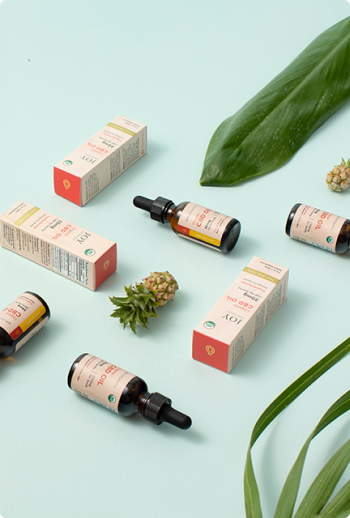
The most common CBG format. A CBG tincture is a liquid extract — typically suspended in a carrier oil like MCT oil — that you take sublingually (under the tongue). Tinctures allow for flexibility and fast absorption compared to edibles.
Look for: mg of CBG per serving (not just per bottle), Certificate of Analysis (COA) from a third-party lab confirming potency and safety, and whether the product is full spectrum, broad spectrum, or isolate, noting the presence of cannabidiolic acid and other cannabinoids for potential entourage effects.
CBG Gummies
An emerging format as consumer interest in CBG grows. Most CBG gummies combine CBG with CBD. The category is smaller than CBD gummies but expanding.
Full Spectrum vs Broad Spectrum vs CBG Isolate
-
Full spectrum contains CBG, CBD, trace THC (under 0.3%), and other cannabinoids and terpenes. Generally associated with the entourage effect.
-
Broad spectrum contains multiple cannabinoids but has had THC (the main psychoactive chemical) removed. A middle option for those who want cannabinoid diversity without any THC.
-
CBG isolate is pure CBG with other compounds removed. May be suitable for those who specifically want CBG without anything else, though it forfeits any entourage benefit.
What to Look for on the Label
Before buying any CBG product, confirm the following:
-
Certificate of Analysis (COA): Every reputable CBG brand should make COAs — independent lab test results — publicly available, ideally linked directly from the product page. The COA should confirm CBG potency and screen for pesticides, heavy metals, residual solvents, microbial contaminants, and other safety concerns. Don't buy from a brand that won't show you their test results.
-
USDA Organic Certification: Hemp is a bioaccumulator, meaning it readily absorbs compounds from the soil it's grown in — including pesticides and heavy metals. USDA-certified organic hemp is grown without synthetic pesticides or herbicides, which reduces the risk of contaminants carrying through to the final product. Joy Organics is USDA-certified organic.
-
Milligrams of CBG: Make sure the label specifies CBG content per serving, not just total cannabinoids or CBD alone. A product marketed as a "CBG tincture" that contains mostly CBD with only trace CBG isn't what it implies.
Explore Joy Organics' USDA organic CBG tincture →
How to Use CBG
Method: Oral
Tinctures are taken by mouth and are typically held in the mouth briefly before swallowing. This allows some cannabinoids to be absorbed through the tissues in the mouth before the rest is processed through the digestive system. As a result, tinctures may have a faster onset than capsules or edibles, which are absorbed entirely through digestion.
Starting Point for Serving Size
There's no official serving size recommendation for CBG from the FDA. Most people start with 5–15mg of CBG and hold that amount for 1–2 weeks before adjusting. Because CBG is still relatively new as a consumer product, start lower than you think you need and give it time.
Factors that may influence your ideal amount include body weight, metabolism, whether you're using full spectrum or isolate, and what you're using it for. Consulting a healthcare provider for personalized guidance is always recommended, especially if you take other medications that affect sympathetic nervous system activity or blood pressure, or if you drink alcohol regularly.
Timing
Some users prefer CBG in the morning for focus and calm; others take it in the evening as part of a wind-down routine. Unlike THC, CBG doesn't produce intoxication at any amount, so timing is more about your personal wellness goals than avoiding impairment.
Is CBG Safe? What You Should Know
CBG is generally well-tolerated based on available research, and serious adverse effects have not been reported in human studies to date. That said, a few points are worth noting.
Potential Drug Interactions
Cannabinoids, including CBG, are metabolized by a family of liver enzymes called cytochrome P450 (CYP450). Some prescription medications are also processed by these same enzymes, which means cannabinoids could theoretically influence how your body processes those drugs — either speeding up or slowing down their metabolism.
If you take prescription medications, particularly blood thinners, antiepileptics, or immunosuppressants, consult a physician before adding CBG to your routine to ensure safe interaction with the endocannabinoid system and its regulatory functions.
Third-Party Testing
The hemp supplement market is not as tightly regulated as the pharmaceutical industry, which means product quality can vary. Third-party lab testing — where an independent laboratory verifies what's in a product — is the primary quality control mechanism available to consumers. Always verify a COA before purchasing.
Joy Organics publishes batch-specific COAs for all products. View our lab results →
USDA Organic: Why It Matters for Safety
Because hemp absorbs compounds from the soil, the farming practices behind a CBG product matter for safety, not just sustainability. USDA organic certification requires growers to meet specific standards for soil health, pest management, and prohibited substances. It's one of the strongest quality signals available in the hemp category.
Legal Status
Hemp-derived CBG is federally legal in the United States under the 2018 Farm Bill, which legalized hemp and its derivatives containing less than 0.3% THC, including cannabinoids derived from the cannabis plant. State laws vary — a small number of states have additional restrictions on hemp cannabinoid products. Check your state's current regulations if you have any uncertainty.
Frequently Asked Questions
What does CBG do?
CBG (cannabigerol or "the mother of all cannabinoids") interacts with the body's endocannabinoid system, binding to both CB1 and CB2 receptors. Early research suggests it may support mood balance, physical recovery, and stress response, though large-scale human clinical trials are still limited. CBG is non-intoxicating and will not produce a high.
Is CBG stronger than CBD?
CBG and CBD work differently, rather than one being "stronger" than the other. CBG binds more directly to cannabinoid receptors, while CBD tends to modulate the endocannabinoid system indirectly. Many products combine both compounds on the premise that they may work more effectively together than in isolation.
Will CBG get you high?
No. CBG is non-intoxicating at any amount. It does not produce the psychoactive effects associated with THC. Full spectrum CBG products contain trace amounts of THC (under 0.3%) by legal requirement, but not enough to cause intoxication.
How much CBG should I take?
There's no official serving size for CBG established by the FDA. Most people start with 5–15mg and adjust over time based on their experience. Consult a healthcare provider for personalized guidance, particularly if you take prescription medications.
What is CBG in weed or hemp?
CBG occurs naturally in both cannabis and hemp plants. Hemp-derived CBG products, like those from Joy Organics, are produced from federally legal hemp varieties that contain less than 0.3% THC. "CBG in weed" and "CBG in hemp" refer to the same compound — the difference is the plant source and legal classification.
What is CBG in gummies?
CBG in gummies refers to cannabigerol extract added to an edible gummy format. Most CBG gummies combine CBG with CBD and other cannabinoids. Gummies have a longer onset time than sublingual tinctures because they're processed through the digestive system.
What does CBG stand for?
CBG stands for cannabigerol, a naturally occurring cannabinoid found in the hemp plant. It's often called the "mother cannabinoid" because it's the precursor compound that converts into CBD, THC, and other cannabinoids during plant growth.
Is CBG the same as CBD?
No. CBG and CBD are distinct compounds with different molecular structures, different receptor interactions, and different bodies of research behind them. Both are non-intoxicating hemp-derived cannabinoids, but they work through different mechanisms. Many products include both.
The Bottom Line
CBG is one of the most interesting cannabinoids in early-stage wellness research — a non-intoxicating hemp compound that interacts with the body's endocannabinoid system in ways that are meaningfully different from CBD. While the research is promising, it's early, and most studies have been conducted in preclinical settings rather than large human trials.
What's clear is that not all CBG products are equal. The quality of the hemp source, the extraction method, and independent lab verification matter as much as the milligrams on the label. Joy Organics' CBG tincture is USDA certified organic, third-party tested, and formulated as a full-spectrum product — meaning you get CBG alongside CBD and the broader array of naturally occurring hemp compounds.
Shop Joy Organics Organic CBG Tincture →
These statements have not been evaluated by the Food and Drug Administration. CBG products are not intended to diagnose, treat, cure, or prevent any disease. Consult a healthcare provider before adding any new supplement to your routine, particularly if you are pregnant, nursing, or taking prescription medications.
Sources
-
Valdeolivas S, et al. "Neuroprotective Properties of Cannabigerol in Huntington's Disease: Studies in R6/2 Mice and 3-Nitropropionate-lesioned Mice." Neurotherapeutics. 2015;12(1):185–199. https://www.ncbi.nlm.nih.gov/pmc/articles/PMC4322067/
-
Farha MA, et al. "Uncovering the Hidden Antibiotic Potential of Cannabis." ACS Infectious Diseases. 2020;6(3):338–346. https://pubs.acs.org/doi/10.1021/acsinfecdis.9b00419
-
Colasanti BK. "A Comparison of the Ocular and Central Effects of Delta 9-tetrahydrocannabinol and Cannabigerol." Journal of Ocular Pharmacology. 1990;6(4):259–269.
-
Brierley DI, et al. "Cannabigerol is a Novel, Well-Tolerated Appetite Stimulant in Pre-Satiated Rats." Psychopharmacology. 2016;233(19-20):3603–3613. https://pubmed.ncbi.nlm.nih.gov/27563840/