(833) 569 7223


CBD and CBG Together: How the Combination Works
By Todd Smith, Co-Founder of Joy Organics
Scientifically reviewed by Dr. Jill Palko, OB-GYN — Last reviewed: June 2026

CBD and CBG are two of the most well-researched non-intoxicating cannabinoids in hemp. Using them together isn't just a marketing angle — there's a scientific rationale for why combining them may produce a more complete effect than either alone. This page explains how, what the research shows, and what to look for in a CBD + CBG product.
Why CBD and CBG Are Often Formulated Together
CBD and CBG interact with the body's endocannabinoid system (ECS) through different mechanisms. CBD works primarily by modulating the ECS indirectly — influencing how cannabinoid receptors respond to the body's own endocannabinoids, inhibiting the enzyme that breaks down anandamide (a key endocannabinoid also known as the bliss molecule), and interacting with serotonin and TRPV1 receptors that affect mood regulation and bodily functions. By contrast, CBG binds more directly to CB1 and CB2 receptors in the central nervous system and immune system and may also influence GABA reuptake and alpha-2 adrenoceptors, demonstrating unique properties among many cannabinoids.
Because they engage overlapping but distinct pathways, the two compounds may complement each other. A product that delivers both beneficial cannabinoids gives the ECS inputs through multiple channels simultaneously — which is the core idea behind the entourage effect of multiple cannabinoids working synergistically.
The Entourage Effect
The entourage effect is the hypothesis, first formally proposed by researcher Raphael Mechoulam in the late 1990s, that cannabinoids, terpenes, and other beneficial compounds from the hemp plant work more effectively in combination than as isolated single compounds. [1] This is the scientific basis for full spectrum formulation — preserving the hemp plant's full chemical profile rather than extracting one compound in isolation.
CBD and CBG used together are one of the clearest examples of this principle. Each fills in the gaps the other leaves. CBD's broad, indirect modulation of the ECS alongside CBG's more direct receptor binding to CB1 and CB2 cannabinoid receptors creates a more complete picture of cannabinoid-ECS interaction than either alone.
What Using CBD and CBG Together May Support
Neither CBD nor CBG is an FDA-approved treatment for any general wellness condition, and the research on their combined use is still developing. With that caveat clearly stated, here's what each individually has been studied for regarding their therapeutic potential and potential health benefits, and how the combination fits:
Stress response and calm: CBD's interaction with 5-HT1A serotonin receptors has been investigated in the context of stress response. CBG's potential interaction with GABA pathways — associated with nervous system regulation — may contribute a complementary mechanism. CBD and CBG together may engage both the ECS and stress-related neurotransmitter systems.
Focus and daily wellness: Some users report that CBG provides a clearer, more grounded effect than CBD alone when used in the morning. The combination is increasingly popular as a daytime supplement for people looking for support without any intoxication or drowsiness.
Physical recovery: Both CBD and CBG have been studied in preclinical models for their potential influence on inflammation response — CBD through its broad ECS modulation, CBG through direct CB2 receptor binding in immune tissue. Research is early, and results in animal models don't automatically translate to humans, but the combination is a logical one for muscle and joint recovery contexts.
All claims above reflect current early-stage research. These products are not intended to diagnose, treat, cure, or prevent any disease.
CBD + CBG: Full Spectrum vs Broad Spectrum
If you want the benefits of both CBD and CBG, you have a few options:
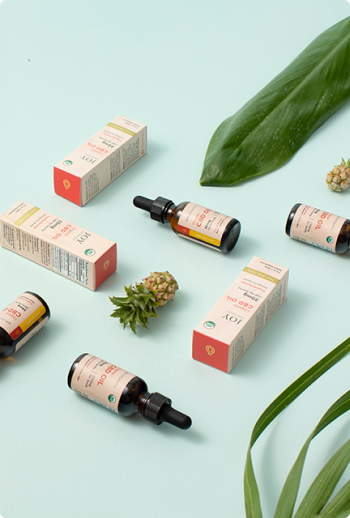
Full spectrum CBD + CBG products contain both cannabinoids alongside trace THC (under 0.3%), terpenes, and other minor cannabinoids. This is the format most consistent with the entourage effect hypothesis, as it preserves the hemp plant's complete chemical profile and promotes the combined effects of different cannabinoids. Joy Organics' CBG tincture is a full-spectrum formulation containing CBG, CBD, and trace THC.
Broad spectrum CBD + CBG products contain both cannabinoids with THC removed, preserving the plant's unique benefits while avoiding psychoactive effects. Unlike THC, these formulations avoid any psychoactive effects entirely, providing a great option for people who want cannabinoid diversity without any THC exposure.
CBD + CBG isolate blends combine pure CBD isolate and pure CBG isolate in a carrier oil. This gives you precise control over the ratio but foregoes the entourage benefit of the plant's natural terpene and minor cannabinoid profile.
What to Look for in a CBD + CBG Product
Both cannabinoids listed with mg per serving. A product that says "CBD + CBG" but doesn't clearly state how many milligrams of each you're getting per dose isn't giving you enough information. The Certificate of Analysis (COA) should confirm both.
Certificate of Analysis from a third-party lab. The COA verifies potency and screens for contaminants. Confirm the COA is current (batch-specific) and from an accredited laboratory. Joy Organics publishes COAs for every product batch. View lab results →
USDA organic certification. Because hemp absorbs compounds from its growing environment, the farming source matters. USDA-certified organic hemp is grown without synthetic pesticides. Joy Organics is USDA-certified organic — one of a small number of brands in the CBD/CBG category with this designation.
A meaningful amount of CBG. CBG is expensive to produce. Some products list CBG on the label but contain only a trace amount relative to CBD. Check the COA to confirm the CBG content is substantial enough to be meaningful — at minimum a 1:1 or 1:2 CBG:CBD ratio.
Shop Joy Organics Organic CBG + CBD Tincture →
How to Use CBD and CBG Together
Tincture (most common format): Take the recommended amount and hold it in your mouth for 60 seconds before swallowing, or mix it with a drink. Tinctures offer a convenient way to incorporate cannabinoids such as CBD and CBG into your daily wellness routine.
Timing: Most people who use CBD and CBG together for daily wellness support take it in the morning. CBG's preclinical profile (appetite stimulation, daytime regulation) suggests it may be best suited to daytime use for most people, though there's no clinical evidence establishing optimal timing for humans.
Starting amount: There is no official serving size recommendation for CBD or CBG from the FDA. Start with the manufacturer's suggested serving, hold that amount for 1–2 weeks, and adjust as needed. Consult a healthcare provider for personalized guidance, especially if you take prescription medications such as those for chronic pain relief, neurological disorders, anxiety disorders, or those with anti-inflammatory properties.
Frequently Asked Questions
Does CBD work better with CBG?
The entourage effect hypothesis suggests yes — cannabinoids may work more effectively in combination because they engage the endocannabinoid system through different mechanisms simultaneously. CBD and CBG are a particularly well-reasoned combination because they have distinct receptor interactions. However, direct clinical evidence comparing CBD alone to CBD + CBG in humans is still limited, and more in vivo studies are needed to fully understand their potential benefits and how the body responds to this combination.
What is the best ratio of CBD to CBG?
There's no clinically established optimal ratio. Common commercial products use ratios ranging from 1:1 to 5:1 CBD:CBG. A 1:1 ratio maximizes CBG exposure, potentially enhancing the entourage effect by leveraging the individual benefits of two cannabinoids working together. A higher CBD ratio is more cost-effective since CBD is less expensive to produce and is often the more abundant cannabinoid in hemp. The right ratio depends on what you're looking for — start with a product that lists clear mg of each, preferably from full spectrum or broad spectrum options that offer other cannabinoids and other compounds, and adjust based on your experience and overall wellness routine.
Can I take CBD and CBG at the same time?
Yes. There are no known safety concerns with taking CBD and CBG together. Many full spectrum hemp products naturally contain both. As with any supplement, consult a healthcare professional if you take prescription medications, as both cannabinoids may influence how the liver processes certain drugs (via CYP450 enzymes).
Are CBD and CBG the same as full spectrum?
Full-spectrum hemp products contain CBD, CBG, trace THC, and dozens of other minor cannabinoids and terpenes. A product labeled "CBD + CBG" may or may not be full spectrum — it could be two isolated cannabinoids blended together without the rest of the plant profile. Read the label and COA carefully. Joy Organics' CBG tincture is full spectrum, meaning it contains CBG and CBD within the context of the plant's complete cannabinoid and terpene profile, supporting the entourage effect and offering a balanced experience.
The Bottom Line
CBD and CBG are a well-reasoned combination — complementary cannabinoids with distinct mechanisms that together may engage the endocannabinoid system more completely than either alone. The best implementation of this combination is a full-spectrum product where both cannabinoids appear alongside the plant's natural terpene profile, in a USDA-certified organic formulation verified by independent lab testing.
Shop Joy Organics Organic CBG Tincture (Full Spectrum) →
These statements have not been evaluated by the Food and Drug Administration. These products are not intended to diagnose, treat, cure, or prevent any disease. Consult a healthcare provider before adding any new supplement to your routine.
Sources
-
Ben-Shabat S, et al. "An Entourage Effect: Inactive Endogenous Fatty Acid Glycerol Esters Enhance 2-Arachidonoyl-Glycerol Cannabinoid Activity." European Journal of Pharmacology. 1998;353(1):23–31. https://pubmed.ncbi.nlm.nih.gov/9721036/
-
Cascio MG, et al. "Evidence That the Plant Cannabinoid Cannabigerol Is a Highly Potent Alpha-2-Adrenoceptor Agonist." British Journal of Pharmacology. 2010;159(1):129–141. https://www.ncbi.nlm.nih.gov/pmc/articles/PMC2823359/
-
Russo EB. "Taming THC: Potential Cannabis Synergy and Phytocannabinoid-terpenoid Entourage Effects." British Journal of Pharmacology. 2011;163(7):1344–1364. https://www.ncbi.nlm.nih.gov/pmc/articles/PMC3165946/