(833) 569 7223


What Is CBD Oil? A Complete Guide to Cannabidiol Oil
By Todd Smith, Co-Founder of Joy Organics
Scientifically reviewed by Dr. Jill Palko, OB-GYN — Last reviewed: June 2026

CBD oil is a hemp-derived supplement containing cannabidiol (CBD) — a non-intoxicating compound with a well-studied interaction profile across the endocannabinoid system and serotonin receptors. It's one of the most widely used supplements in the US, especially among those seeking to support relaxation, restful sleep, and overall wellness, yet it remains one of the most misunderstood. This page covers exactly what it is, how it works, how it's made, and why understanding it matters for your overall health and wellness.
What Is CBD Oil?
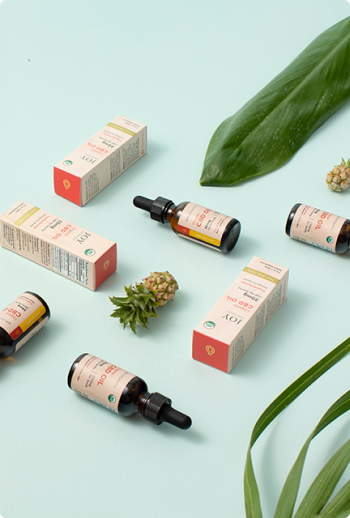
CBD oil is created by extracting CBD from hemp (Cannabis sativa plant), then diluting the extract in a carrier oil — most commonly MCT oil (from coconut), hemp seed oil, or fractionated olive oil. The result is a liquid supplement taken by placing drops in the mouth for direct absorption into the bloodstream, or swallowed as a general oral supplement, similar to other over-the-counter products.
The term "CBD oil" is sometimes used interchangeably with "CBD tincture" — though technically a tincture uses an alcohol base rather than oil. In common usage, they mean the same thing: a dropper bottle of hemp-derived CBD product extract in liquid form.
CBD Oil vs. Hemp Oil
These two terms are frequently confused:
CBD oil contains cannabidiol extract from hemp flowers, leaves, and stalks. It contains meaningful amounts of CBD (typically 300–3000mg per bottle) and may contain other cannabinoids.
Hemp seed oil (also sold as "hemp oil") is pressed from the seeds of the hemp plant and contains no CBD. It's a nutritional oil rich in omega fatty acids, similar to flaxseed oil. Hemp seed oil on its own has no endocannabinoid system activity.
Some products labeled "hemp oil" in grocery stores are hemp seed oil — not CBD oil. If CBD content matters to you, verify the milligrams of CBD on the label and the COA (certificate of analysis) to ensure quality and THC content compliance.
How CBD Oil Is Made
Quality CBD oil production involves several key steps:
Cultivation: USDA organic hemp grown in US soil (Colorado, Kentucky, Oregon) under regulated conditions. The farming practice directly affects what ends up in the finished product — organic hemp limits pesticide and herbicide residue, ensuring premium hemp extract quality and compliance with hemp-derived products regulations.
Extraction: CO2 extraction is the industry-leading method. Pressurized CO2 acts as a solvent to pull cannabinoids, including the prevalent active ingredient cannabidiol, and terpenes from the hemp plant material without leaving chemical residue. Ethanol extraction is also used. Solvent-based extraction (butane, hexane) is lower quality and may introduce contaminants, affecting product safety.
Post-processing:
- Full spectrum: Minimal processing to retain the full cannabinoid and terpene profile, including trace THC
- Broad spectrum: Additional THC removal step while retaining other cannabinoids
- Isolate: All compounds except CBD removed — pure CBD crystal
Carrier oil addition: The concentrate is diluted in a carrier oil, such as olive or coconut oil, to a specific potency (mg CBD per ml).
Third-party testing: A quality brand sends finished product to an independent ISO-accredited lab for potency verification and contaminant screening (pesticides, heavy metals, residual solvents, microbials).
Full Spectrum vs. Broad Spectrum vs. Isolate CBD Oil
| CBD Type | What's In It | THC | Entourage Effect |
|---|---|---|---|
|
Full Spectrum |
CBD + other cannabinoids + terpenes + <0.3% THC |
Yes (trace) |
Yes |
|
Broad Spectrum |
CBD + other cannabinoids + terpenes, no THC |
No |
Partial |
|
Isolate |
CBD only |
No |
No |
Most researchers and practitioners recommend full spectrum or broad spectrum CBD potency over isolate because of the entourage effect — the evidence that cannabinoids and terpenes work more effectively together than CBD alone. [1]
How CBD Oil Works
CBD oil interacts with the body's endocannabinoid system (ECS) — a cell-signaling network that helps regulate mood, sleep quality, stress response, immune system function, appetite, and physical recovery. The ECS operates through cannabinoid receptors — CB1 receptors (brain and nervous system) and CB2 receptors (immune cells, immune tissue, and periphery).
CBD doesn't bind directly to CB1 receptors the way THC does (THC binds to CB1 receptors in the brain, affecting mood and memory). Instead, it:
- Inhibits FAAH (the enzyme that breaks down anandamide), raising endocannabinoid levels involved in the human body’s regulation of pain sensation and mood
- Acts as an agonist at 5-HT1A serotonin receptors, contributing to potential benefits observed in human studies related to mood and anxiety regulation
- Interacts with TRPV1 receptors involved in inflammation and physical discomfort, a key factor in reducing inflammation and joint pain as suggested by animal model studies
- Modulates CB1 receptor activity indirectly without the psychoactive effects associated with THC, the cannabinoid responsible for the "high" from the cannabis plant. CBD is non-intoxicating and does not cause a high
This multi-receptor profile is why CBD may have potential health benefits and has been studied across such a diverse range of wellness applications, including various health conditions and in randomized controlled trials.
What CBD Oil Is Used For
Sleep support — CBD's most-researched general wellness application among various health issues. A 2019 case series found 66.7% of 72 subjects reported improved sleep scores within a month. [2]
Stress and calm — CBD's 5-HT1A receptor activity and anandamide elevation are associated with a calmer baseline state. Research including a 2011 clinical study documented stress reduction as a potential benefit of CBD use.
Physical recovery — CB2 receptor activity in muscle tissue and TRPV1 interaction make CBD relevant to post-workout recovery, supporting the body's regulation of various ailments.
General ECS maintenance — Daily CBD oil supports the endocannabinoid system's homeostatic function across mood, sleep, and immune regulation.
What CBD Oil Is NOT
It is not marijuana oil. Hemp CBD oil and marijuana cannabis plant oil are different products from the same species. Hemp oil is derived directly from the hemp plant and must contain less than 0.3% THC; marijuana products may contain higher THC levels and are regulated at the state level under different rules.
It is not FDA-approved for general wellness. Epidiolex (pharmaceutical CBD) is FDA-approved for certain epilepsy types and specific seizure disorders, including rare forms such as Dravet syndrome and Lennox-Gastaut syndrome. Consumer CBD oil is a dietary supplement for general wellness.
It will not get you high. CBD is a non-intoxicating cannabinoid formulation at any dose. Trace THC in full spectrum hemp oil is not enough to produce psychoactive effects, and THC-free or broad spectrum products are available for those avoiding THC altogether. All legal CBD products must contain less than 0.3% THC.
It is not all the same quality. A 2017 JAMA study found only 31% of tested CBD products were accurately labeled, highlighting quality control issues. The FDA does not regulate CBD products for safety or purity, so COA (certificate of analysis) verification from third-party labs is essential to confirm potency, purity, and absence of contaminants such as pesticides or heavy metals. [3]
Consumers should consult a doctor or other healthcare professional before using CBD products, especially if taking other medications, as CBD may interact with other drugs and affect liver enzymes.
Frequently Asked Questions
What is CBD oil used for?
The most common uses are sleep support, daily stress and calm management, physical recovery, and general ECS maintenance. CBD oil is a dietary supplement and is not FDA-approved to treat any medical condition.
Are CBD oil products the same as hemp oil products?
No. CBD oil contains cannabidiol extracted from hemp. Hemp oil (or hemp seed oil) is pressed from hemp seeds and contains no CBD. They are different products.
Does CBD oil make you high?
No. CBD is non-intoxicating. Full spectrum formulas contain less than 0.3% THC — far too little to produce any psychoactive effect.
Is the oil containing CBD legal?
Hemp-derived CBD oil containing less than 0.3% THC is federally legal under the 2018 Farm Bill legal definition. State laws vary. See: Is CBD Oil Legal? →
How much CBD oil should I take?
Most adults start with 15–30mg daily and adjust based on response. See: How to Use CBD Oil →
The Bottom Line
CBD oil is a hemp extract in liquid form, taken orally, that interacts with the body's endocannabinoid system and serotonin receptors to support calm, sleep, recovery, and general wellness. Quality varies enormously — the key differentiators are USDA organic certification, third-party COA verification, and spectrum type. A full spectrum or broad spectrum oil from a transparent, certified-organic brand, such as Joy Organics, offering gluten-free cannabinoid formulations, is the recommended starting point for most people.
Read: Full Spectrum CBD Oil Guide →
These statements have not been evaluated by the Food and Drug Administration. These products are not intended to diagnose, treat, cure, or prevent any disease. Consult a healthcare provider before adding any new supplement to your routine.
Sources
- Russo EB. "Taming THC: Potential Cannabis Synergy and Phytocannabinoid-terpenoid Entourage Effects." British Journal of Pharmacology. 2011;163(7):1344–1364. https://www.ncbi.nlm.nih.gov/pmc/articles/PMC3165946/
- Shannon S, et al. "Cannabidiol in Anxiety and Sleep: A Large Case Series." The Permanente Journal. 2019;23:18–041. https://www.ncbi.nlm.nih.gov/pmc/articles/PMC6326553/
- Bonn-Miller MO, et al. "Labeling Accuracy of Cannabidiol Extracts Sold Online." JAMA. 2017;318(17):1708–1709. https://pubmed.ncbi.nlm.nih.gov/29114823/