(833) 569 7223


CBD Oil for Recovery & Muscle Support
By Todd Smith, Co-Founder of Joy Organics
Scientifically reviewed by Dr. Jill Palko, OB-GYN — Last reviewed: June 2026

CBD oil is widely used by active people and athletes as part of post-workout and recovery routines. The scientific basis for this lies in CBD's interaction with CB2 receptors in muscle and immune tissue, TRPV1 receptor modulation, and ECS support of the post-exercise recovery state. This page covers the research, timing, and how CBD oil fits into a complete recovery approach.
The Science: Why CBD Products May Support Recovery
CB2 Receptors in Muscle and Immune Tissue
CB2 receptors are distributed throughout skeletal muscle and the immune system within the human body. Exercise-induced muscle damage triggers an inflammatory cascade involving many of the same immune cell types and signaling pathways where CB2 receptor activity has been documented in sports medicine and pain management contexts. CBD's interaction with CB2 receptors is the core mechanistic basis for its use in physical recovery, supporting pain management and recovery processes. [1]
TRPV1 Receptor Interaction
CBD activates and then desensitizes TRPV1 — the "capsaicin receptor" involved in thermosensation and the body's signaling of physical discomfort and pain sensation. This receptor desensitization effect is part of the reason CBD is explored in contexts involving physical discomfort and managing chronic pain. [2] Multiple studies have shown that CBD's interaction with TRPV1 receptors contributes to its relaxation and recovery effects in athletes and active individuals.
ECS Support Post-Exercise
Exercise naturally elevates endocannabinoids — the endocannabinoid system plays a role in the "runner's high" and the post-exercise mood elevation many people experience. CBD's inhibition of FAAH sustains elevated anandamide post-exercise, potentially extending this natural recovery-supporting state, while mitigating exercise-induced oxidative stress and inflammation, thereby contributing to overall health and recovery in active people, including elite athletes.
Preclinical Anti-Inflammatory Research
Multiple animal studies have demonstrated CBD's ability to reduce inflammatory markers and tissue swelling, highlighting its anti-inflammatory properties. [3] Human clinical evidence in exercise recovery specifically is still developing and largely in the early stages — we need to be honest that most of the data is preclinical, and more research is required to draw conclusions about its potential benefits in this context.
CBD is not an FDA-approved anti-inflammatory and should not replace medical treatment for acute injuries or chronic conditions. The FDA has only approved one CBD product for epilepsy.
How to Use CBD Oil for Recovery
Post-workout timing (recommended): Most recovery-focused CBD users take CBD oil within 60 minutes of finishing exercise — when the inflammatory signaling from exercise is at its peak. Oral onset of 15–45 minutes means practical same-day timing.
Pre-workout (some users): A smaller group takes CBD 30–60 minutes before training to potentially pre-load before the inflammatory response begins. Evidence for this timing specifically is limited.
Daily maintenance: For consistent training schedules, daily CBD oil use is more effective than only taking on hard training days. The ECS benefits from consistent cannabinoid input.
Serving size: 25–50mg is a common range for recovery-focused use — generally in the moderate-to-higher range compared to general wellness administration. Consulting a healthcare professional is recommended for personalized guidance and to ensure safety and avoid risk when combining CBD with other medications, since CBD can interact with liver enzymes affecting drug metabolism.
CBD Oil vs. CBD Topicals for Recovery
Many active people use both:
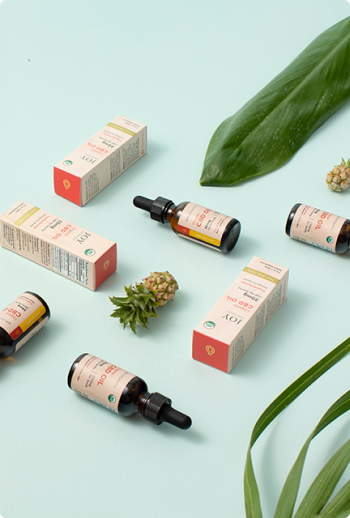
CBD oil (systemic): Absorbed into the bloodstream via oral tissue, providing whole-body ECS support. Reaches muscle, immune tissue, and the nervous system systemically. CBD oil can be taken orally or in capsule form.
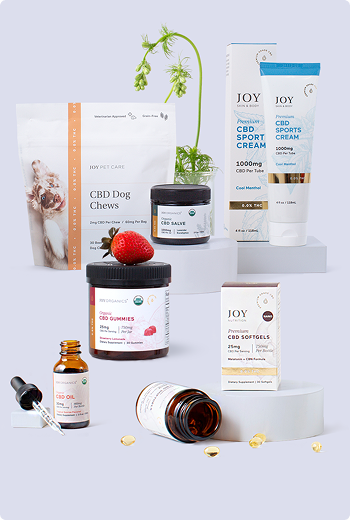
CBD topical (local): Applied directly to a specific muscle or joint. Interacts with local CB2 receptors and TRPV1 receptors in the application area. Does not produce the same systemic blood levels as an oral product.
For general post-workout recovery support, CBD oil is the systemic tool. For a specific area of focus — a particular joint, a tight muscle group — topical application is complementary.
Recovery Stack Recommendation
Post-workout (daytime): Joy Organics full spectrum CBD oil (with trace amounts of THC) — oral, 15–45 min onset, CB2 and TRPV1 support, 4–6 hour window.
Evening: Joy Organics CBD + CBN Sleep Gummies — sleep is the primary repair window, where muscle protein synthesis and tissue recovery peak. Supporting sleep quality is one of the most effective recovery interventions available. See CBD Sleep Gummies →
Frequently Asked Questions
Does CBD oil help with muscle recovery?
CBD's CB2 receptor activity in muscle and immune tissue, TRPV1 interaction, and ECS support provide a mechanistic basis for recovery. Human clinical evidence in exercise recovery specifically is limited, with further research needed to clarify CBD's potential benefits. CBD is generally considered safe but is not an FDA-approved anti-inflammatory and should be used cautiously, especially considering its possible drug interactions.
When should I take CBD oil for recovery?
Post-workout within 60 minutes is the most common and better-supported timing. Daily maintenance use is more effective than only taking on hard training days.
How much CBD oil should I take for recovery?
25–50mg is a common range for recovery applications. Start at the lower end and adjust based on response.
Will CBD oil show up on a drug test?
Full spectrum CBD oil contains trace THC (under 0.3%). Regular use at higher amounts could potentially accumulate detectable THC metabolites in drug testing. For drug-tested athletes, use a verified broad spectrum (non-detectable THC) product.
Is CBD oil allowed in sports?
The World Anti-Doping Agency (WADA) has removed CBD from its list of banned substances, unlike THC, which remains prohibited and may still be a concern depending on your sport's specific testing thresholds and regulations. CBD products are often sold as unregulated supplements in the U.S., so it is important to choose products that have undergone ISO-accredited third-party lab testing to ensure compliance and avoid issues with other drugs or contaminants.
The Bottom Line
CBD oil is a well-grounded post-workout addition for people seeking systemic CB2 receptor and ECS support for physical recovery. Take it within an hour post-workout at 25–50mg. Pair it with CBD + CBN Sleep Gummies in the evening for a comprehensive cannabinoid recovery approach targeting both the acute post-workout window and the overnight repair phase.
Shop CBD + CBN Sleep Gummies →
These statements have not been evaluated by the Food and Drug Administration. These products are not intended to diagnose, treat, cure, or prevent any disease. Consult a healthcare provider before adding any supplement to your routine.
Sources
- Atwood BK, Mackie K. "CB2: A Cannabinoid Receptor with an Identity Crisis." British Journal of Pharmacology. 2010;160(3):467–479.
- Iannotti FA, et al. "Nonpsychotropic Plant Cannabinoids, CBDs and CBDV." British Journal of Pharmacology. 2014;171(16):3790–3804.
- Hammell DC, et al. "Transdermal Cannabidiol Reduces Inflammation." European Journal of Pain. 2016;20(6):936–948.