(833) 569 7223


CBD Oil for Sleep: How It Works & How to Use It
By Todd Smith, Co-Founder of Joy Organics
Scientifically reviewed by Dr. Jill Palko, OB-GYN — Last reviewed: June 2026

CBD oil is one of the most commonly used hemp supplements for sleep — and one of the better-studied natural sleep support options available. This page explains the mechanisms, what the clinical research shows, and how to use CBD oil effectively for sleep.
Why CBD Oil May Support Sleep
CBD's sleep-relevant mechanisms are distinct from pharmaceutical sleep aids and work through the endocannabinoid system and serotonin pathways:
5-HT1A Serotonin Receptor Activation
CBD activates the 5-HT1A receptor, which regulates mood, stress response, and the nervous system's transition to relaxation. For people who struggle to fall asleep because of racing thoughts or stress spillover, this pathway is directly relevant. CBD reduces the mental activation that delays sleep onset, helping to improve sleep quality and promoting a good night's rest.
FAAH Inhibition and Anandamide
By inhibiting FAAH (the enzyme that breaks down anandamide, a naturally occurring hormone), CBD sustains higher endocannabinoid levels. Anandamide is associated with a settled, calm baseline state that supports the transition to sleep and may help with poor sleep.
Serving-Dependent Effects
Lower CBD servings may be mildly alerting in some individuals; higher servings (25–50mg+) are more consistently associated with the calming effects relevant to sleep and may help in falling asleep faster. Sleep applications typically use the moderate-to-higher end of consumer amounts.
What the Research Shows for CBD Products
2019 Shannon Case Series: 72 adults with sleep and stress concerns. Within the first month, 66.7% reported improved sleep scores. Sleep scores fluctuated over the study period. [1]
2017 Systematic Review: Babson et al. reviewed the research on cannabis, cannabinoids, and sleep. Found promising evidence for CBD in REM sleep behavior disorder and tentative evidence for sleep quality improvement more broadly. [2]
Epidiolex RCT data: In pharmaceutical CBD trials for epilepsy, sedation was a common side effect — supporting the mechanistic case that CBD has sleep-relevant CNS effects at dose.
CBD Oil vs. CBD Gummies for Sleep
Both can support sleep — the difference is in onset and duration:
| CBD Oil (Oral) | CBD Gummies | |
|---|---|---|
|
Onset |
15–45 min |
45 min – 2 hours |
|
Duration |
4–6 hours |
6–8 hours |
|
Best timing |
30–60 min before bed |
1–2 hours before bed |
|
Convenience |
Dropper required |
No dropper, pre-measured |
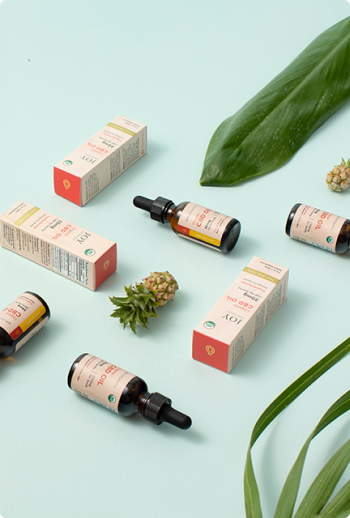
For sleep specifically, gummies' longer duration (6–8 hours) aligns better with a full sleep period, supporting deep sleep and restful nights. CBD oil, often formulated with organic MCT coconut oil as a carrier oil, is more suitable if you want faster onset or prefer the oral format, which allows for better absorption and bioavailability.
For the most targeted sleep support, Joy Organics CBD + CBN Sleep Gummies combine full spectrum CBD oil (with trace amounts of THC) with CBN (a CB1-active minor cannabinoid with sedative properties) for complementary sleep mechanisms that may promote a good night's sleep through the entourage effect. See CBD + CBN Sleep Gummies →
How to Use CBD Oil for Sleep
Timing: Take 30–60 minutes before your intended sleep time. CBD oil's oral onset is 15–45 minutes — planning 30–60 minutes before bed gives the peak effect window time to align with sleep.
Starting amount: 25mg is the recommended starting amount for sleep applications. Research suggests sleep effects appear more reliably at moderate-to-higher servings. Start at 25mg and increase to 50mg if needed after two weeks.
Technique: Hold in the mouth for 60 seconds before swallowing. This is particularly important for sleep use — you want the fastest possible onset from an oral product.
Consistency: Take at the same time each night. CBD's sleep benefits build with consistent use over 2–4 weeks.
Sleep hygiene: CBD oil works best alongside appropriate sleep conditions — dark, cool room; screens off an hour before bed; consistent wake time. It's a support, not a substitute for good sleep habits.
CBD Oil + CBN: An Enhanced Option
For people who want stronger sleep support from an oil format, some brands offer CBD + CBN oil tinctures. CBN's CB1 receptor activity adds complementary sedative-like properties to CBD's serotonin and ECS mechanisms, with such products often containing other sleep-promoting ingredients and cannabinoids.
Always consult a healthcare professional if you're concerned about interactions with certain medications like prescription sleep medicine or medications that treat insomnia before including CBD in your daily wellness routine.
Frequently Asked Questions
Does CBD oil help you sleep?
For many people, yes — particularly for sleep onset (difficulty falling asleep due to stress or mental arousal). Research including a 2019 case series documents sleep improvement in the majority of CBD users. Results require appropriate administration, consistency, and quality product.
How much CBD oil for sleep?
Start at 25mg. If no improvement after two weeks, try 50mg. Research on CBD and sleep generally uses servings in the 25–150mg range.
When should I take CBD oil for sleep?
30–60 minutes before your intended sleep time for oral CBD oil.
Is CBD oil or melatonin better for sleep?
They work differently. CBD addresses nervous system arousal and ECS calm. Melatonin regulates circadian timing. CBD is more appropriate for difficulty falling asleep due to stress or arousal; melatonin is more appropriate for jet lag and circadian disruption.
Will CBD oil make me groggy in the morning?
At standard amounts (25–50mg), morning grogginess is uncommon with CBD oil. Higher amounts or products containing CBN, a well-supported cannabinoid, may have stronger residual effects in some people. If grogginess occurs, reduce the amount slightly or take earlier.
Consider that individual responses to CBD can vary significantly based on metabolism and other medications. Using a full dropper or one serving consistently can help achieve the desired effect while minimizing side effects, including drowsiness, dry mouth, and diarrhea.
Always choose third-party tested, USDA certified organic products to ensure quality. Use full spectrum products if you want to benefit from the entourage effects, and avoid THC that may trigger a positive drug test if you're subject to testing.
The Bottom Line
CBD oil supports sleep primarily by reducing pre-sleep stress and mental arousal through 5-HT1A serotonin receptor activity and ECS modulation. Take 25mg orally 30–60 minutes before bed, consistently, for 2–4 weeks. For enhanced sleep support, add a CBD + CBN product (tincture or gummies) for complementary CB1 receptor activity.
These statements have not been evaluated by the Food and Drug Administration. These products are not intended to diagnose, treat, cure, or prevent any disease. Consult a healthcare provider before adding any supplement to your routine.
Sources
- Shannon S, et al. "Cannabidiol in Anxiety and Sleep: A Large Case Series." The Permanente Journal. 2019;23:18–041.
- Babson KA, et al. "Cannabis, Cannabinoids, and Sleep: a Review of the Literature." Current Psychiatry Reports. 2017;19(4):23.