(833) 569 7223


Organic CBD Oil: Why USDA Certification Matters
By Todd Smith, Co-Founder of Joy Organics
Last reviewed: June 2026

"Organic" appears on hundreds of CBD oil labels. The vast majority lack USDA certification to back it up. For consumers seeking a daily oral supplement for overall wellness, the distinction between genuine certified-organic hemp and uncertified hemp described as "organic" is meaningful — here's why.
What USDA Organic Means for CBD Oil
USDA organic certification for hemp requires:
- No synthetic pesticides, herbicides, or chemical fertilizers, ensuring the highest quality and purity in CBD products
- Only NOP-approved inputs during cultivation, reflecting a commitment to sustainable farming practices
- Annual third-party audits by an NOP-accredited certifier, providing transparency and third-party testing to verify product content and purity
- Documented compliance from seed to finished product, including the extraction method and the entire process to maintain whole ingredients and nutrients
The USDA Organic seal is federally regulated. Misuse is a federal violation. It's not a marketing decision — it requires ongoing investment in documentation, third-party compliance, and supply chain accountability to ensure the highest quality.
You can verify any USDA organic claim independently at the USDA Organic Integrity Database: ams.usda.gov/organic-integrity
Why Organic Matters Specifically for CBD Oil
Hemp bioaccumulation. Hemp is a phytoremediator — it actively absorbs compounds from its environment, including pesticides, herbicides, and heavy metals from soil. This property is valuable for environmental cleanup and supports the planet's health but creates risk for consumers if the hemp is grown with synthetic pesticides, affecting the overall health and efficacy of the final full spectrum CBD products.
Extraction concentrates the plant. CO2 extraction (the quality standard) doesn't selectively remove pesticides. Whatever pesticide residues exist in the source plant can become concentrated in the extract, impacting the overall functional quality of the final product. Organic farming eliminates these residues at the source, ensuring an excellent final product for overall wellness.
Daily oral use. CBD oil taken orally absorbs directly through blood vessels in the mouth — this is more direct systemic entry than digested food. For a daily supplement absorbed this way, source quality is directly relevant to what's entering your bloodstream, ensuring an excellent product with the perfect serving and quantity for optimal relaxation benefits.
"Organic Practices" vs. USDA-Certified Organic CBD Products
Many CBD brands use language like:
- "Grown using organic practices"
- "Pesticide-free"
- "All-natural"
- "Made with organic hemp"
None of these phrases are regulated in the same way as the USDA Organic seal. They are typically based on self-reporting, may be accurate, and may not be. There's no third-party audited accountability or laboratory testing behind them.
USDA-certified organic means an independent accredited certifier has reviewed and approved the practices, including sustainable farming methods and the use of non-GMO inputs. While third-party lab tests are still required to verify the potency of the cannabinoids, this organic seal is the premier standard for guaranteeing clean cultivation and environmental impact.
How Many CBD Brands Are USDA Organic?
Very few. The most commonly cited reasons:
- USDA organic certification requires significant investment — documentation, audits, and compliance staff
- Hemp-specific federal organic standards became clearer only after the 2018 Farm Bill
- Many brands launched when USDA certification for hemp wasn't yet fully established
This makes USDA certification a meaningful differentiator in the market, not just a marketing claim.
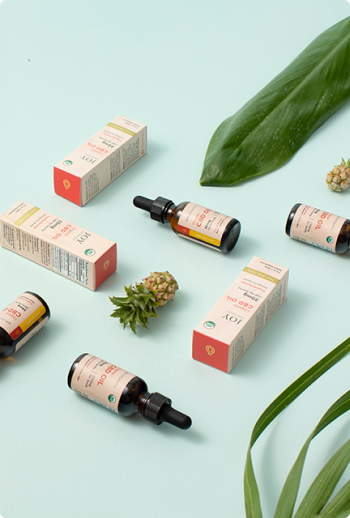
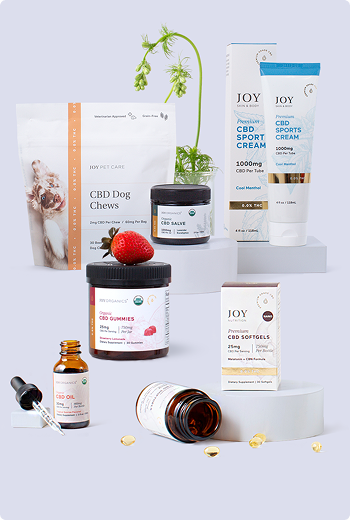
Joy Organics Organic CBD Oil
Joy Organics holds USDA organic certification for most of its hemp product line, verifiable at the USDA Organic Integrity Database. Joy Organics was among the early CBD brands to achieve and maintain organic certification.
Products:
- Full Spectrum CBD Oil — complete hemp profile, trace THC under 0.3%, promotes benefits through the entourage effect
- THC-Free Broad Spectrum CBD Oil — USDA organic, non-detectable THC
- Multiple potencies: 450mg, 900mg, 1350mg, 2250mg per bottle
All products:
- CO2 extracted
- Nano-emulsified for enhanced sublingual absorption
- Batch-specific COA published
- Free shipping
Pairing Organic Certification with a COA
USDA organic certification verifies the hemp source, ensuring it is grown using sustainable farming practices. A batch-specific COA from an independent lab verifies the finished product — confirming actual CBD potency, presence of other cannabinoids like CBN, CBG, CBC, and screening for pesticides, heavy metals, and residual solvents.
Both together give you the most complete quality picture available:
- Organic certification: source quality verified
- COA: finished product quality verified
Neither alone is sufficient. A brand can have organic certification and still have an inaccurate potency or lack transparency in extraction methods. A brand can have a COA and still use non-organic hemp. The combination is the standard.
Frequently Asked Questions
Is organic CBD oil better?
For a daily oral supplement, yes — USDA organic certification meaningfully reduces pesticide residue risk in the finished product and supports access to a gluten-free, vegan, and high-quality CBD oil tincture. Paired with a verified COA, it represents the highest available quality standard in the CBD oil market, ensuring transparency and trust for customers committed to incorporating CBD into their lives.
Always check for clear labeling of CBD potency and ingredients, and consult a healthcare professional before adding CBD to your wellness routine since CBD may interact with medications metabolized by the liver, similar to grapefruit.
How do I know if CBD oil is really organic?
Look for the USDA Organic seal on the product, then verify at ams.usda.gov/organic-integrity. Don't rely on uncertified "organic practices" claims.
Does organic CBD oil cost more?
Yes, typically. Certification has genuine compliance costs reflected in the price. The premium represents real supply chain accountability.
Is Joy Organics CBD oil certified organic?
Yes. Verifiable at ams.usda.gov/organic-integrity.
The Bottom Line
USDA organic certification is the only independently verified "organic" claim in the hemp market. For a daily oral supplement like a CBD tincture that enters the bloodstream directly, source quality is a meaningful consideration to ensure the highest standards in organic CBD oil. Choose organic, non-GMO, U.S.-grown hemp products and pair USDA organic certification with a batch-specific COA for the strongest available quality assurance.