(833) 569 7223


What Does CBD Tincture Do? Effects & Uses Explained
By Todd Smith, Co-Founder of Joy Organics
Scientifically reviewed by Dr. Jill Palko, OB-GYN — Last reviewed: June 2026

A CBD tincture interacts with the body's endocannabinoid system (ECS) — a signaling network that helps regulate mood, sleep, stress response, appetite, and inflammation. What CBD specifically does depends on how much you take, how consistently you use it, and what your individual ECS tone is like. This page explains the mechanism, what most people experience, and what the research supports.
How CBD Tinctures Work in the Body
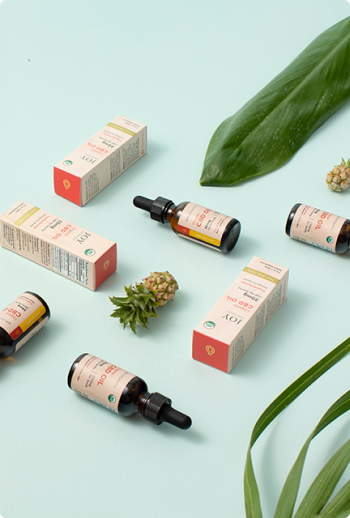
CBD tinctures are liquid extracts derived from the hemp plant. When you hold a CBD tincture in your mouth for 60 seconds, the cannabidiol absorbs directly into the bloodstream through oral tissue (oral intake of CBD tinctures allows for faster absorption compared to edibles). From there, it circulates systemically, interacting with the endocannabinoid system and several other cannabinoid receptor systems:
CB1 receptors — concentrated in the brain and central nervous system. CBD has low direct affinity for CB1 but influences how other compounds bind to it and inhibits the enzyme (FAAH) that breaks down anandamide — an endocannabinoid associated with mood elevation and calm. This interaction is part of how cannabidiol CBD may work within the body's endocannabinoid system, affecting pain sensation and other neurological functions.
CB2 receptors — found primarily in immune tissue throughout the body. CBD's interaction here may influence inflammatory signaling and immune cell behavior, a focus of ongoing research aimed at understanding the potential health benefits and effects of CBD on health and neurological disorders.
5-HT1A receptors — serotonin receptors associated with mood regulation, stress response, and the nervous system's relaxation response. CBD is an agonist at 5-HT1A, meaning it directly activates these receptors. This is a distinct mechanism from most antidepressants and is not the same as causing euphoria — it's more closely associated with a settling, calming effect. CBD interacts with these receptors through mucous membranes when taken as an oral CBD tincture, contributing to its effects. While more research is needed, this interaction may help explain how CBD products function in the body.
TRPV1 receptors — sometimes called the "capsaicin receptors"- are involved in regulating temperature sensation, inflammation, and the body's perception of physical discomfort. CBD's activation of TRPV1 may contribute to its potential in physical recovery contexts.
What CBD Oil Tinctures Feel Like
CBD is non-intoxicating. It will not make you feel high, impair your judgment, or alter your perception. At an appropriate serving size, most adults describe it as:
- A general sense of calm or ease — not sedation, not a buzz
- Physical relaxation, particularly in areas of tension or tightness
- A more settled, less reactive mental state
- Improved ability to fall asleep (for evening use) or a steadier focus (for daytime use)
These effects are subtle, especially at first. CBD doesn't feel like taking a medicine. It's more like the difference between a stressful week and a normal one — the contrast is noticeable when you pay attention to it, but it doesn't announce itself.
What CBD Tinctures Are Used For
Sleep Support
CBD's most studied general wellness application is sleep. Research, including a large 2019 case series, found that approximately two-thirds of subjects reported improved sleep scores within a month of CBD use. [1] CBD's interaction with serotonin receptors and its ECS effects may reduce the mental arousal that delays sleep onset, potentially improving sleep quality.
Stress Response and Daily Calm
CBD's 5-HT1A serotonin receptor activity is the basis of its stress-response research profile. In a 2011 study, researchers found CBD significantly reduced physiological and psychological responses to a stress test. [2] Daily use of a CBD tincture is one of the most common approaches to supporting a calmer baseline state
See CBD Tinctures for Stress & Calm →
Physical Recovery
CBD is widely used post-exercise. Its CB2 receptor activity in muscle and immune tissue, and its TRPV1 receptor interaction relevant to physical discomfort signaling, make it a reasonable addition to a recovery routine. Human clinical evidence in this specific context is still developing.
See CBD Tinctures for Recovery →
General Wellness Maintenance
Many people use CBD tinctures daily simply as a general wellness supplement — supporting the ECS's role in maintaining homeostasis across mood, sleep, stress, and physical function. This is the most common use case.
What CBD Tinctures Do NOT Do
They do not cure diseases. CBD is not an FDA-approved treatment for any condition except the specific seizure disorders covered by Epidiolex (pharmaceutical CBD). Avoid any brand making disease treatment claims.
They do not produce a high. CBD is non-intoxicating at any amount. Full spectrum CBD tinctures contain trace THC (under 0.3%) that is not enough to cause intoxication.
They do not work instantly. While a single serving begins absorbing within 15–45 minutes, the full wellness benefits from a CBD tincture typically develop with 2–4 weeks of consistent daily use.
They are not the same for everyone. Individual ECS tone varies; so does response to CBD. Some people are more responsive than others. Serving size, consistency, and product quality (third-party laboratory testing confirming content) all affect outcomes.
It is important to note that while CBD tinctures may support wellness and symptom relief, they are not a substitute for medical treatment prescribed by a doctor. Always consult a healthcare provider before starting CBD, especially if you are taking other medications or are pregnant, to understand possible side effects and risks, and keep CBD products away from children.
Frequently Asked Questions
What does CBD oil tincture do for you?
CBD tincture interacts with the endocannabinoid system and serotonin receptors in ways associated with calm, reduced physical tension, improved sleep, and stress response support. Effects are subtle and build with consistent daily use. It is not intoxicating.
What does CBD tincture do to your brain?
CBD modulates serotonin (5-HT1A) receptors associated with mood and calm, inhibits the breakdown of anandamide (an endocannabinoid involved in mood and relaxation), and influences how CB1 receptors in the brain respond to stimuli. It does not produce intoxication or alter perception but may cause some mild adverse effects such as fatigue or nausea in some individuals.
How long does it take to feel the effects of a CBD tincture?
Oral absorption produces noticeable effects within 15–45 minutes for most people. Meaningful wellness effects from consistent daily use typically become apparent after 2–4 weeks.
Will CBD tincture make me sleepy?
CBD is not a sedative in the pharmacological sense. At lower amounts, some users find it mildly alerting. At higher amounts, its calming effects may support falling asleep more easily. For sleep-specific support, a CBD + CBN product is more targeted.
Does CBD tincture make you high?
No. CBD is non-intoxicating. Full spectrum tinctures contain trace THC (under 0.3%) that is too low to produce any psychoactive effect. The Agriculture Improvement Act of 2018, also known as the 2018 Farm Bill, removed hemp as a federally controlled substance, legalizing its production, but some states still restrict hemp-derived CBD products.
The Bottom Line
CBD tinctures interact with the endocannabinoid system and serotonin receptors to support a calmer baseline state, better sleep, physical recovery, and stress response. The effects are real but subtle — they build over weeks of consistent use rather than announcing themselves immediately. For most people, the daily wellness case for CBD is strong, particularly when using a quality CBD product that's USDA certified organic, free from heavy metals, and delivers what the label claims.
Shop Joy Organics CBD Tinctures →
Read: Do CBD Tinctures Work? →
Read: How to Use CBD Tinctures →
These statements have not been evaluated by the Food and Drug Administration. These products are not intended to diagnose, treat, cure, or prevent any disease. Consult a healthcare provider before adding any new supplement to your routine.
Sources
- Shannon S, et al. "Cannabidiol in Anxiety and Sleep: A Large Case Series." The Permanente Journal. 2019;23:18–041. https://www.ncbi.nlm.nih.gov/pmc/articles/PMC6326553/
- Bergamaschi MM, et al. "Cannabidiol Reduces the Anxiety Induced by Simulated Public Speaking in Treatment-Naïve Social Phobia Patients." Neuropsychopharmacology. 2011;36(6):1219–1226. https://pubmed.ncbi.nlm.nih.gov/21307846/