(833) 569 7223


Best CBD Tinctures: Expert Picks & Buyer's Guide
By Todd Smith, Co-Founder of Joy Organics
Scientifically reviewed by Dr. Jill Palko, OB-GYN — Last reviewed: June 2026

A CBD tincture is one of the most efficient ways to use cannabidiol — oral absorption bypasses the digestive system, delivering CBD directly into the bloodstream for faster onset than edibles or capsules. But with hundreds of products on the market and minimal FDA oversight, quality ranges from excellent to essentially useless. This guide covers what to look for, what to avoid, and how to evaluate a CBD tincture before you buy.
What Is a CBD Tincture?
A CBD tincture is a liquid hemp extract — CBD suspended in a carrier oil, typically MCT oil — delivered by dropper for oral use. The terms "CBD tincture" and "CBD oil" are used interchangeably in the hemp market. Historically, a tincture meant an alcohol-based extract; modern hemp CBD products are oil-based, but the name has stuck.
The primary active ingredient is cannabidiol (CBD), a non-intoxicating phytocannabinoid that interacts with the body's endocannabinoid system (ECS), which plays a role in various physiological processes. A quality CBD tincture will clearly state: mg of CBD per serving, spectrum type (such as full spectrum CBD oil, broad spectrum CBD, or CBD isolate), carrier oil (like organic MCT oil, fractionated coconut oil, hemp oil, or extra virgin olive oil), and provide access to a Certificate of Analysis (COA) from an independent lab that confirms potency, purity, and absence of contaminants.
Full Spectrum vs Broad Spectrum vs CBD Isolate Tinctures
The first decision when choosing a CBD tincture is spectrum type. This determines what else is in the product alongside CBD.
Full spectrum CBD oil retains all of hemp's naturally occurring cannabinoids — including trace THC (under 0.3%), CBG, CBN, terpenes, and minor cannabinoids. Full spectrum is associated with the entourage effect: the principle that hemp compounds work more effectively together than in isolation. For most people, full spectrum is the recommended starting point.
Broad spectrum CBD oil tinctures contain multiple cannabinoids and terpenes but have had THC removed. A good middle option for those who want entourage effect benefits with THC-free CBD — for example, those subject to drug testing.
CBD isolate is pure CBD with everything else removed. The most predictable single-cannabinoid option, but it forgoes the entourage effect. May be appropriate for specific situations but is generally considered less effective than full spectrum CBD tincture for general wellness use.
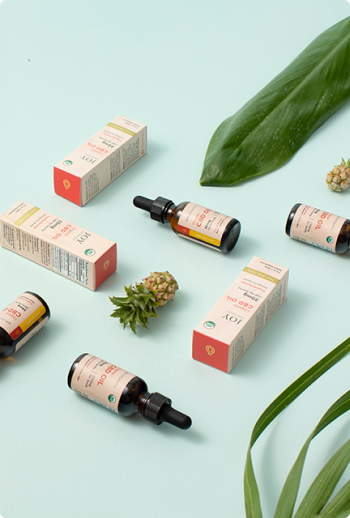
Joy Organics offers both THC-free broad spectrum and full spectrum CBD tinctures, both USDA certified organic.
What to Look for in a CBD Tincture
Certificate of Analysis (COA)
Non-negotiable. A COA from an accredited third-party laboratory confirms:
-
CBD potency per serving — does the label match what's actually in the bottle?
-
THC content — is it within legal limits (under 0.3%)?
-
Contaminant screening — pesticides, heavy metals, residual solvents, microbials
The COA should be batch-specific (tied to the product you're buying, not a historical test). It should be publicly accessible — linked from the product page or available by QR code on the packaging. Joy Organics publishes batch-specific COAs for all products. View our lab results →
USDA Organic Certification
Hemp absorbs compounds from its growing environment — including pesticides, herbicides, and heavy metals from soil. USDA-certified organic hemp is grown under federal standards that prohibit synthetic pesticides and herbicides. This is particularly important for hemp-derived CBD products you're taking daily and sublingually, where absorption efficiency is high, as consuming CBD sublingually allows purified CBD to enter the bloodstream quickly.
Joy Organics is USDA-certified organic — one of a small number of CBD tincture brands with this designation.
Milligrams of CBD Per Serving and Per Bottle
This is where many consumers get confused. A "1000mg CBD tincture" in a 30ml bottle delivers approximately 33mg per 1ml serving. A "300mg CBD tincture" in the same size bottle delivers about 10mg per serving. Always calculate mg-per-serving, not just total mg per bottle.
Carrier Oil
MCT oil (derived from coconut) is the most common and well-studied carrier for CBD, often used in mixed CBD oil formulations. It has a neutral flavor, high bioavailability, and is stable at room temperature. Hemp seed oil is also used and adds omega-3 fatty acids, but has a more pronounced flavor. Both are good options — it comes down to taste preference.
Price Per Milligram
Calculating price per mg of CBD is the most objective way to compare products across different sizes and prices. Divide the retail price by the total CBD mg in the bottles.
A rough market reference: quality full spectrum CBD products from reputable brands typically range from $0.03–$0.10/mg of CBD. Products significantly below this range warrant scrutiny of COA accuracy. Products significantly above it should offer clear differentiation, such as USDA-certified organic ingredients, advanced nano-emulsification technology, etc.
How to Use a CBD Tincture
Step 1: Shake the bottle to distribute the CBD extract evenly.
Step 2: Fill the dropper to the indicated line. Most droppers measure 0.5ml or 1ml.
Step 3: Place the oil in your mouth. Hold for 60 seconds before swallowing. This absorption allows CBD to enter the bloodstream directly, with onset in 15–45 minutes.
Step 4: Don't eat or drink for 5–10 minutes after to allow full absorption.
Finding your serving size: Start with the manufacturer's suggested serving and hold for one week before adjusting. Most people find their optimal CBD serving size within 2–4 weeks of consistent daily use.
CBD Tincture Uses: What People Take Them For
CBD tinctures are most commonly used for:
-
Sleep support — CBD has been studied for its potential to support sleep quality; for enhanced sleep support, a CBD + CBN tincture or sleep gummies may be more targeted. See CBD Sleep Gummies →
-
Stress and calm support — CBD's interaction with 5-HT1A serotonin receptors is the basis of its stress-related research profile
-
Physical recovery — CB2 receptor activity and preclinical anti-inflammatory properties; often used post-workout
-
General daily wellness — taken as part of a morning or evening routine
These statements have not been evaluated by the FDA. CBD tinctures are not intended to diagnose, treat, cure, or prevent any disease.
What to Avoid When Buying a CBD Tincture
No COA or outdated COA: If a brand can't or won't show you an independent lab report, walk away.
Vague labeling: "Hemp extract" with no CBD mg content listed is a red flag. You have no way to know what you're getting.
Medical claims: Any brand claiming their CBD tincture "treats" or "cures" a condition is making claims that aren't supported by the FDA and likely reflects a pattern of cutting corners elsewhere too.
Unusually low prices: Producing quality, organic, third-party-tested CBD tinctures has a real cost floor. Products priced at $15 for 1000mg are unlikely to be what the label claims.
Artificial ingredients: A quality CBD tincture contains hemp extract, a carrier oil, and sometimes a natural flavoring. Artificial flavors, synthetic colorings, or a long list of unrecognizable additives aren't necessary.
Frequently Asked Questions
What is the best CBD tincture?
The best CBD tincture is one that has a verifiable batch-specific COA from an accredited third-party lab testing facility, is USDA certified organic, clearly states CBD mg per serving in the tincture bottles, and is full spectrum if the entourage effect is a priority. Joy Organics' USDA organic CBD oil tinctures meet all of these criteria.
How long does it take for a CBD tincture to work?
Oral delivery typically produces noticeable effects within 15–45 minutes. Consistent daily use over 2–4 weeks tends to produce more defined, stable effects than occasional administration.
How much CBD tincture should I take?
Start with the manufacturer's suggested serving (typically 15–30mg CBD) and assess over one week before adjusting. There is no FDA-established serving size for CBD. Consult a healthcare provider for personalized guidance.
Are CBD tinctures the same as CBD oil?
Yes. The terms are used interchangeably. Both refer to a liquid CBD hemp extract in a carrier oil, delivered orally by dropper.
Do CBD tinctures have THC?
Full spectrum CBD tinctures contain trace THC (under 0.3%) from the hemp plant — not enough to cause intoxication. Broad spectrum CBD tinctures and isolate tinctures are THC-free CBD products.
Can I travel with a CBD tincture?
Domestically, hemp-derived CBD tinctures are federally legal. For air travel, carry COA documentation. International travel is more complex — research destination country laws before traveling with any hemp product.
The Bottom Line
The CBD tincture market is large, competitive, and inconsistent in quality. The differentiators that matter most are: verifiable third-party testing, USDA organic certification, clearly stated CBD content per serving, and a spectrum type that matches your needs. Joy Organics' CBD tinctures are USDA certified organic, batch-tested, and available in both THC-free and full spectrum formulations.
Shop Joy Organics CBD Tinctures →
See how we compare to other brands →
Read: How to Use CBD Tinctures →
These statements have not been evaluated by the Food and Drug Administration. These products are not intended to diagnose, treat, cure, or prevent any disease. Consult a healthcare provider before adding any new supplement to your routine.