(833) 569 7223


CBD Tinctures for Muscle & Recovery Support
By Todd Smith, Co-Founder of Joy Organics
Scientifically reviewed by Dr. Jill Palko, OB-GYN — Last reviewed: June 2026

CBD tinctures are widely used by active people and athletes as part of post-workout and recovery routines. The scientific basis comes from CBD's interaction with CB2 receptors — concentrated in muscle and immune tissue — and its preclinical anti-inflammatory properties. This page covers the research, practical usage, and how CBD fits into a complete recovery approach, including its role within the body's endocannabinoid system and the entourage effect present in multiple cannabinoids found in CBD products derived from the hemp plant.
The Science: Why CBD May Support Recovery
Physical exercise — particularly resistance training and high-intensity work — creates acute tissue stress and muscle soreness. The body's recovery process involves local inflammatory signaling, muscle protein synthesis, muscle discomfort, and nervous system restoration. Several CBD mechanisms are relevant here:
CB2 receptor activity in muscle and immune tissue. CBD interacts with CB2 receptors found throughout skeletal muscle and the immune system. The post-exercise inflammatory response involves many of the same CB2-mediated immune pathways that CBD research has investigated, highlighting the potential benefits of plant compounds in CBD oil. [1]
TRPV1 receptor interaction. CBD activates TRPV1 — the "capsaicin receptor" involved in sensory signaling and the body's processing of physical discomfort, contributing to how the body responds to recovery. This interaction is part of the mechanistic basis for CBD's role in recovery contexts.
Endocannabinoid system support. Exercise itself elevates endocannabinoids — the famous "runner's high" is partially ECS-mediated. CBD's inhibition of FAAH (the enzyme that breaks down anandamide) may sustain that post-exercise ECS elevation, supporting the natural recovery state.
Preclinical anti-inflammatory data. Multiple animal studies have documented CBD's anti-inflammatory properties and the potential benefits of high-potency formulations. [2] Human clinical trial evidence in exercise recovery specifically is still developing, but the mechanistic basis is strong, with ongoing placebo-controlled trials investigating dosage and effectiveness.
These are mechanistic arguments and preclinical findings. CBD is not an FDA-approved anti-inflammatory and chronic pain medicine and should not be used as a substitute for medical treatment.
How to Use CBD Tinctures for Recovery
Timing options:
Pre-workout: Some adults take CBD 30–60 minutes before training. Rationale: pre-loading may reduce the inflammatory response initiated during exercise. Evidence for this timing specifically is limited and may vary based on body weight and metabolism.
Post-workout (preferred): Most recovery-focused users take CBD oils for recovery within an hour after finishing activity. This is when inflammatory signaling peaks and the recovery process is beginning. Oral onset of 15–45 minutes means timing is practical, allowing for beneficial absorption in the mouth.
Daily maintenance: For people training consistently, daily CBD use maintains consistent ECS support rather than catching up after each workout.
Serving size: Start with 25–50mg CBD for recovery use. Higher amounts in this range are more commonly used for physical recovery than for general relaxation. Consult a healthcare professional for personalized guidance, especially if you take other supplements or medications or have other medical conditions.
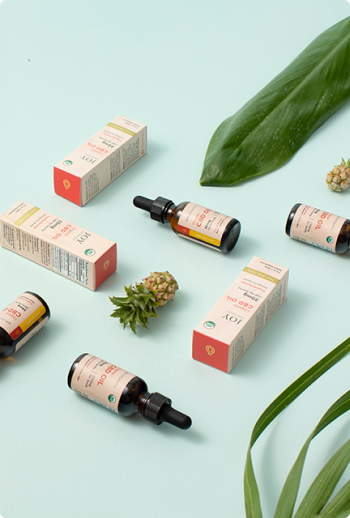
Format: An oral CBD tincture is the fastest-onset option for recovery use. A full spectrum tincture naturally contains CBD alongside CBG and other cannabinoids, which broadens the CB receptor engagement compared to CBD alone. High-potency tinctures can deliver upwards of 75 mg to 150 mg of CBD per mL, appealing to most people seeking effective recovery support. CBD isolate tinctures contain only cannabidiol without other cannabinoids, catering to those who prefer gluten-free, THC-free products that focus on brain and life wellness.
Building a Complete Recovery Stack
For active people who want comprehensive cannabinoid recovery support:
Post-workout (daytime): Full spectrum CBD tincture — fast onset, CB2 receptor support, sustained 4–6-hour effect window.
Evening/sleep: CBD + CBN sleep gummies — sleep is where the majority of physical recovery and muscle protein synthesis occur. Supporting sleep quality directly supports recovery. See CBD Sleep Gummies with CBN →
Consistency: Both products work best with daily use rather than situational use only on hard training days.
Frequently Asked Questions
Does CBD oil help with muscle recovery?
CBD's CB2 receptor activity in muscle and immune tissue, TRPV1 receptor interaction, and preclinical anti-inflammatory properties provide a mechanistic basis for recovery support. Human clinical evidence, specifically in exercise recovery, is limited. CBD is not an FDA-approved anti-inflammatory.
When should I take CBD tincture for recovery?
Post-workout (within an hour of finishing) is the most common timing. Daily use is generally more effective than situational administration on hard training days only.
Is CBD tincture or CBD topical better for recovery?
Different applications. A tincture provides systemic support through the ECS and bloodstream. A CBD topical applied directly to a muscle or joint targets that specific area locally. Many active users use both — tincture for systemic recovery support, topical for specific targeted areas.
Will CBD tincture affect my athletic performance or testing?
CBD itself is not prohibited by WADA (World Anti-Doping Agency) as of the last review. However, full spectrum CBD tinctures contain trace THC (under 0.3%), and some sports organizations test for THC separately. If you compete in a tested sport, use a verified THC-free broad spectrum CBD oil or CBD isolate product and check your sport's specific regulations.
The Bottom Line
A daily CBD tincture with appropriate CBD potency is a well-grounded addition to a recovery protocol. CBD's CB2 receptor activity, TRPV1 interaction, and ECS support are mechanistically relevant to the post-exercise recovery process. Pair it with a CBD + CBN sleep product in the evening for the most comprehensive cannabinoid recovery approach, considering factors like purity and consulting a doctor when needed.
Shop Joy Organics CBD Tinctures →
Shop CBD Sleep Gummies with CBN →
Read: What Does CBD Tincture Do? →
These statements have not been evaluated by the Food and Drug Administration. These products are not intended to diagnose, treat, cure, or prevent any disease. Consult a healthcare provider before adding any new supplement to your routine.
Sources
-
Atwood BK, Mackie K. "CB2: A Cannabinoid Receptor with an Identity Crisis." British Journal of Pharmacology. 2010;160(3):467–479. https://www.ncbi.nlm.nih.gov/pmc/articles/PMC2931561/
-
Hammell DC, et al. "Transdermal Cannabidiol Reduces Inflammation and Pain-Related Behaviours in a Rat Model of Arthritis." European Journal of Pain. 2016;20(6):936–948. https://pubmed.ncbi.nlm.nih.gov/26517407/